An exploration of the process and pedagogy behind establishing a non-linear narrative inside Second Life with the view to create a learning space rich in cross-curricular opportunities.

...there's been a murder in the Red Barn

...there's been a murder in the Red Barn
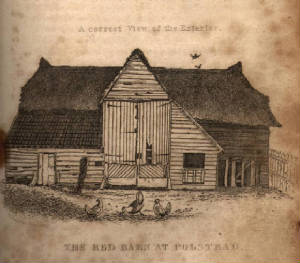
The "Red Barn" was a thatched timber out-building with a section of it's roof clad in red tiles.

Saturday, June 23, 2007

Textualization

In methodologising a space, I find that once I have a clear picture of it my head, I am able to describe it, right down to minute details, which has always sorta wigged me out. I am not sure where this comes from, certainly I am a text-based RPG fan, but it is a form of writing I seem to have some talent for. So, after a hiatus where life, assessment and marking got in the way, my brain was free enough to begin to flesh out the details of the actual space that "The Red Barn Mystery" will take place.

Now call me old fashion, but I started at MUD - and, having already built the space, imagined what it ouwl dbe like to be there. Decided arbritrarly that standing at the front of the barn and looking towards it was NORTH, then SWE is fixed - useful when describing surrounding details. I then fired up my wordprocessor [let's face it, writing tools are writing tools, and my spolling is not whert it used to be, then again, it probably never was] but had to dumb it down - font to COURIERNEW, 8 point, maxxed out the margins, set up a ruler:

*app 1234567890123456789012345678901234567890123456789012345678901234567890123456

...and began the process of textually describing the rooms, one by one. Now my MUD convention is to include a juicy descriptive paragraph [maybe 5 lines, 80chars long] on what it is like to be there, what it looks like, what smells and sounds are detectable, sometimes an attempted interpretation of what is being seen, and sometimes allusions to the available ways you can travel from this point. The descriptions I wrote [ linked here, for your convenience ] were very satisfying and in may cases exceed 10 lines - if reasoned that the textualisations provide vital clues for the user to gain an impression of their surroundings - therefore teh richer I made the text, the more vivid the mental imagery I would create. Initially I thought this decision was fraught with writers block and waffle, but on reading them back they are rich and representative of what I wanted to say - certainly what I currently imagine. Knowing back-story can be an empowering thing for a writer - the minutae that will be used later make good writing fodder, well, that is my experience at least. As I composed a room description, I tweaked it to fit in 80 char chunks [a pain, but that is how they are delivered in-game] and then composed append statements to get them to stick to my current room:


*app You stand in the main body of a cavernous timber barn, old straw crunching
*app under your feet. A dim oil lantern flickers overhead casting odd shadows
*app that seem to dance amongst the hand-hewn timbers of the roof space. The barn
*app runs roughly west-east, with a stock enclosure to the east, fresh manure
*app gently steaming in the cool damp air. Saddle and harness gear is visible to
*app the northwest and the straw is swept clear of a timber trapdoor set into the
*app floor, a large rusted iron ring providing its handle. An unsophisticated
*app pane glass window is set into the east wall, it's glass frosted with grime
*app and age, allowing a shaft of eerie light in from outside, visible only
*app because of the swirls of dust kicked up as you walk around. Soft noises
*app from penned livestock makes you feel comfortable and safe.

..then pasted the block into the room, *saving my progress as I went. The resultant environment already has the feel of a dreary farmhouse and surrounds, and that interests me, because the text produces clear pictures in my head.
Experiencing the environment through a client [pictured is SimpleMU] the space is tangible and delicious.

Given that I now had textual descriptions of the world I am building, it made sense to add these also to the MOO version of the scenario. Fortunately, MOO and MUD are similar enough that, with a little minor tweaking [good old search and replace], I was able to use command-line to quickly add the same textual descriptions to the same rooms:

@set here.description to "You stand in the main body of a cavernous timber barn, old straw crunching under your feet. A dim oil lantern flickers overhead casting odd shadows that seem to dance amongst the hand-hewn timbers of the roof space. The barn runs roughly west-east, with a stock enclosure to the east, fresh manure gently steaming in the cool damp air. Saddle and harness gear is visible to the northwest and the straw is swept clear of a timber trapdoor set into the floor, a large rusted iron ring providing its handle. An unsophisticated pane glass window is set into the east wall, it's glass frosted with grime and age, allowing a shaft of eerie light in from outside, visible only because of the swirls of dust kicked up as you walk around. Soft noises from penned livestock makes you feel comfortable and safe."

I had already been in SecondLife and done a virtual photoshoot to capture images or views of each of the places in MOO/MUD scenarios, so the pictures and textualisations marry to provide a multi-modal representation of teh space [like how I slipped in an "English" term? subtle hey, will spare you the priviledging of the discourse as my dominance is fading :P].
After a ripper post-marking and reporting afternoon discussion over a cup of tea with Dearest Mrs Noisy [a co-consirator and fellow loony], we brainstormed plot points and discovered that there were conceivably actually four [4] viable suspects in this drama - all of them will be represented and clues leading to them will also be embedded - what was clear to me was that the trial process actually applied in 1826 began with teh conclusion and worked backwards - now correct me if I am wrong that that is arse-about. My sceario will require players [dang, what do i call participants?] to collect the evidence before jumping to an informed conclusion. We also discovered possibilities of introducing another cultural group - The Romany [as english "Gypsies" preferred to be called] is a rich and diverse culture, with well organised social structure and, surprising, strict moral code ... can we use that, yes we can.

So what is next? Making the monsters [oops, automated characters] and objects [or artifacts] they add richness and interactivity. I took Mrs Noisy for a little wander in the MUD, and show her how monsters can talk, act independently, trade interactively, follow a script of pre-determined actions, be richly descriptive [and also kill you if you are a noob] so that for MUD at least offers some fascinating richness opportunities also. MOO bots will use the same conversation engines I build for MUD, and SecondLife will use modified script versions of the same conversation engines as well - this co-development thing is interesting as many elements can be utilised across platforms [allbeit obeying local syntax and within local limitations].

Had to laugh, returned to my SecondLife scenario to find a visitor had parked a helicopter and a hover board on ym hillock, and I could not move them as I am not the owner of the land. In a related issue, I find I cannot place vegetation where I want it, again because I do not own the land. I will, when my bandwidth is less restricted, create some flexi-primis and map some tree foliage to their bumpmaps so they actually look like trees - unlike the hilarious lollipop-like things I currently have as placemarkers for major trees. need some hedges and dry-stone walls, will experiment on aesthetics when the mechanics are more complete.

I will keep you [my adoring readers] posted..... tap tap tap ... is this thing on?

Friday, May 4, 2007

Digging in the Dirt

Ok, so finally back on task after a hiatus where other things just got in the way - life is like that, be it 1L, 2L or whatever.

So I begin to sculpt the MUD version of the Red Barn Mystery.

I attach the commands I used [all 10 or so minutes worth of it] - here - On closer examination this does not look even remotely like an environment at all, but trust me, MUD building and the actual environment being made are a few steps apart. I would _love_ to say that the building process in MUD is intuitive and that there are mature, GUI tools for this, but the reality is it is an eclectic command-line process, issuing commands that make sense when you have used them a few times. The [*add r 9943] command, for example makes a blank unnamed room indexed 9943; the [*name The Farm Yard] names the current room The Farmyard; the [*set x "barn doors" 9943] creates an exit called barn doors from the current room to indexed room 9943; [*save] commits changes to the database; and so on.

My MUD-building process [my own habit, unsure what others do] is as follows:
  • map the area [see previous posting]
  • number all the rooms, starting from the next available unused room index number [this depends on what already exists in the MUD - I keep records of what index numbers I have used for what areas]
  • create all the rooms [I use an exel file to make these commands : *add 9926; then copy/drag down and excel iterates the number for me - copy-paste in one hit to the command line and presto all the rooms are made, albeit unnamed and disconnected from everything.
  • teleport to the starting room [*t 9945], then dig an exit from there out to an existing room [*set x out 10002] then commit [*save], go thru the newly created door and build a reciprocal exit back in, commit then re-enter the new room.
  • I name the room [*name The Alterniverse"] - interestingly, I name all the rooms before describing them - spatially, it seems to help me if I have names - but also sometimes re-work the rooms as the area character emerges.
  • Dig an exit to the next room in the sequence [*set x "red barn mystery" 9926] and commit [*save], go through the newly-created door to ensure I have not pointed it to the wrong place, then rinse and repeat to build the room skeleton for the area.
  • I then visit all the doors that need special treatment [to be closed, locked or hidden for instance] - I close some doors [*set xf "barn doors" 4] then [*set xf "barn doors" 6] to make that door closed and closeable; [*set xf trapdoor 1] to make it hidden and so on, remembering to commit [*save] as I go - I have set up function keys to issue the most common commands to save a little time, and having a scriptable MUx Client program also greatly speeds this process up [I use SimpleMU and ZMUD as clients of choice, having bought licenses to both to remove the "nag screens" of the shareware]
  • Next I fire up a Wordprocessor [like Word] and set the page characteristics to max out margins, page font to 10pt Courier New [remembering that the text-interface uses 80 character wide lines as it's standard, with each line being separated by the next by a HARD RETURN not wrapped. I set up a 76 character wide ruler:
    *app 1234567890123456789012345678901234567890123456789012345678901234567890123456
  • For each room, I write a decent paragraph [4-6 rich sentences] which equates to at least 5 lines as the room description - written in third-person "You see in the distance a dilapidated farm out-building with a thickly thatched roof, yet notice the front portico is clad with vivid red shingles on it's angular roof. This section of the building you surmise has been added on later as it looks less weather beaten and the construction style is ..." BUT it has to be broken down into 76 ish character chunks, each preceded with the command *app to append the text onto that which is already there - a lot like the old line editors [like Vi on unix, or am I showing my age?]. Use Word ONLY because my spolling is at times attrocious.
  • ... and that is what I am up to at the moment - I find the process of textually describing an area _greatly_ clarifies the scenario and while, yes, I have a good idea of what is going on here, I need to words to actually "see" the space. The "devil" is in the details.

2do: describe all the rooms, create the objects, make the NPCs, program them to behave like people ... fun fun fun.

Interestingly and uncharacteristically for me, I have OPENED this partially done area to my MUD players - it might be instructive for them to be able to see what a developing area looks like while it is being made - might stop them winging because I have not finished an area they want to explore - doubt it tho.

Thursday, April 5, 2007

Alterniverse here we come...

Life lesson - save regularly - grrrr. Lost the last attempt at this particular posting because I closed IE7 [and the bloody thing did NOT prompt me to close all tabs, just closed all at once - grrrrr] ok, here we go recreating the wit and colour of the previous posting....

I decided to stay out of 2L today and concentrate on 3L and 4L [3L is my MOO, 4L is my MUD]. I figured that getting angsty about stuff I _want_ to do but cannot is not productive, so decided to focus on 3L and brainstorm in there [I seem to think non-linearly, and my MOO is the prefect brainstorming place].
.
Firstly, I decided a MAP was a plan, so I launched Confluent's "Visual Thought" [my mapping tool of choice - it is free, powerful, full of pre-made shizz and is brill at managing multi-page illustrations - my maps for 4L areas are often involved and need to span a number of pages]. Now to MUVE newbies [Multi-User Virtual Environments ... still with me?] the above illustration might look like a "Concept Map" or a "Mind Map" and although it will _also_ function as that, it is actually a GEOGRAPHICAL map of the area I wanted to build - Redbarn visitors in 2L will recognise this space. It will serve my building needs in both MOO and later in MUD, although the building processes in each are really different ... more on that later.
.
I hooked into my MOO and connected to a suburb I call "The Alterniverse" - a portal of sorts that provides bridges to other spaces quite different to a normal school learning environment - this seems more natural than moving from somewhere in the school grounds [which the "backbone" of my MOO is modelled] to a space station, or under the ocean or..in this scenario, to Polstead in Suffolk in 1826. MOOs, MUDs and MUxs have been around for ages - ever since they spawned from IRC [Internet Relay Chat] - synchronous tools that allowed people from anywhere that a network reached to chat to others in real time [whatever that is]. Social worlds like 2L are really ancestors of these I guess... neways, on with the task. ***WARNING CODE ALERT***
I descended to command line level in the MOO - it is faster and I know what I am doing. I decided to do it this way to see how long it would take to make the geography navigable [all account holders in MOO can do this or use a point and click interface to build for themselves, for free, with no logical limits to the amount of geography they can create]. This command string was entered [one command at a time; each command is separated by a semicolon] but could have been scripted and pasted in on ONE operation, to instantaneously make the space - something I will do in QMOOnity when i clone the area to that MOO as well.
.
emo cracks knuckles ready to begin; @dig r/r,out to The Red barn Mystery; go r; @dig f/f,out to The Farmyard; go f; @dig b/b,out to Outside the Barn; go b; @dig t/t,out to Toolshed Entrance; @dig d/d,out to The Barn Doors; @dig a/a,out to Beside The Barn; go t; @dig w/w,out to The Workbench; @dig i/i,out to Inside the Barn; go i; @dig t/t,out to A Trapdoor; @dig s/s,out to Stock Livery; go t; @dig d/d,out to Down to the Root Cellar; go d; @dig r/r,out to The Root Cellar; go d; go t; go s; @dig x/x,out to #1724 {a circuit to the barn doors}; @dig f/f,out to Feed Storage; go x; go d; go a; @dig t/t,out to Trail Across Field; go t; @dig u/u,out to Atop a Hillock; go u; @dig d/d,out to Towards a Stream; go d; @dig e/e,out to An Encampment; go e; @dig w/w,out to Inside a Wagon; @dig f/f,out to A Fireplace; go f; emote warms himself by the fire; go e; go d; go u; go t; go a; go b; go f; emo rests after a short and intense digging session. [bloody blogger will not let me insert a "downstroke char" so have put in slashes in their place]
.
7 minutes later I was walking around in a fully navigable space. I used long descriptive names for the passageways to various places "To the root cellar" as well as keyboard shortcuts "r" for travellers in a hurry who do not want to click-frenzy. You can walk around now by clicking on the exit names or by typing the command "go t" to travel through the door labelled "t", say. MOO punters can get there by typing "@go alterniverse" and following the links from there.
.
I uploaded to my website an MP3 I ripped of the song by Tom Waits that got me going on this quest in the first place, and embedded it in the entrance room to stream while you get your bearnings, along with an historic lithograph map of Polstead in 1828 I found in my Googling, embellished the room textually and saved. 2 minutes. I went to the farmyard room, embedded an historical lithograph of the Red Barn [the one at the top of the blog] and will re-visit this room to textually embellish and start defining the learning objects in that room as well.
now time for a cup of tea and to contemplate how to visually theme this suburb, decide what learning objects need to be there, what bots will say and how they will look...

Tuesday, April 3, 2007

Well hello, dolly....

... so my first mission was to find a Gypsy Wagon for the gypsy camp I wanted to build beside a river. I found a nice scripted splashing water texture, built a sorta river off the edge of my skybox, with a sorta gravelly bed, mourned the absense of a spline deform tool, settled on a straight river instead. Found a freebie particle-based fire, added 2, rotated one and now have a roaring campfile, originally surrounded by a donut [torus], later surrounded by a few rocks. Then to the wagon. I could not find anything that did not cost, so decided to take pictures of ones I had seen, then to make my own - no mean feat. Wagon V1.0 was hilarious, and the scale was all wrong - you could not get into it as the doors were too short [and I have not found a pose ball that gets the avatar to stoop, yet]. Quite pleased actually with the result - coming into the building project with a plan is a good idea - shape and scale of Wagon V2.0 is fine.
. Now if I can just find out how to GROUP objects I will be a happy panda ... gotta be straight forward I would have thought - every object-oriented graphics program I have ever used has this feature ... buggered if I can find it, prolly staring at me right in the face. Interestingly [and embarrasingly] I could not for the life of me find out how to create a "notecard" - the simplest and most commonist communication method [except for chat] used in SL. Was not in the CREATE menu, was not in the FILE or EDIT menus, flummoxed if I could find it. Lindy said "look in the INVENTORY menu" and bugger me, it is right there - what banana decided that was the logical place for it?
.
The interface in 2L continues to frustrate and entertain me - my avatar has been transported into mid-air, only to plummit and splat, got trapped in objects, had others created inside me and generally go loopy when trying to move or "touch" something - my right arm sticks up sorta spazzily and my left leg shoots out perpendicular then on irregular surfaces - maybe it is a reflection of the driver, unsure what my avatar says about me, but I will put 2 or 3 of the voices in my head to the task of understanding the link. I have journeyed far and wide looking for ideas and free stuff and have stumbled across VAST areas with very few people in them - lots of retail outlets - whole SIMS [2L slang for a simulation] that are themed beautifully but are little more than shop fronts.

I want BOTS - now I do not think this is an unreasonable request but is turning out to be the single most frustrating aspect of my project - I can do it in MOO, and MUD [both of which are 19th century tools, but the 21st century 2L has nothing even like it]. I have now [many thanks to Azwaldo] got a perfectly lovely "chatter" script, and it is embeddable in objects [this takes time, here is one I prepared earlier - The COW above now talks on channel5 - please stay on the line, your meaningless dribble is important to us] but something tells me the story, that is about PEOPLE, would be better told by PEOPLE SHAPED OBJECTS. Seems 2L does not have such a thing and trust me, I have looked.
.
Searching on AVATAR only provided me with 2,874,562 different emporiums to customise my own avatar [yes, a tail, purple wings, glow-in-the-dark tap shoes and enormous multi-coloured intra-species genitalia are nice up to a point ... well, until you get to the cash register, then you realise regular human shape will be fine].
.
Searching on DOLL was startling, mostly because it meant I visited sex districts in search of an inflatable [this is NOT as seedy as it sounds, I want to dress it up, right, and have it play a role, right ... yeah, you are right, in retrospect it still sounds seedy]. There are a LOT of sex districts I am afraid, and judging by the things I can buy and try, I lead a very sheltered life. "Big Betty [L$28000, 8 poses, 5 outfits, 3 realistic noises, natural skintones]" will not, however, do as my murder victim [her startled "O" expression is repulsive and sorta funny at the same time] and "Long John [L$14800, 5 positions, 2 strap-ons, 3 outfits, 4 body types, 4 realistic animations]" is packing a weapon, and yes, it looks like it may go off at any time, but it is not a convincing musket. So I am back to the drawing board. There are clothes EVERYWHERE, my inventory is full of freebies - why can they not be worn by a clothers horse that is NOT an AVATAR??? The 2L development team are missing a prime opportunity here I think.
.
I have a sign/bill board - useful, I have scriptable books - very useful, now I have to work out how to upload textures to skin the objects ... then the story telling can sorta begin - where are you Mrs Noisy??? Taking bloody holidays I would bet, typical!!!
.
... I spent some time looking at life thru the eyes of an avatar - HAVE A READ, was interesting for me, the writer, getting inside the head of a MUD avatar, imagination is such a powerful force is it not?

Saturday, March 17, 2007

paint your wagon

Had a visit from Mrs Noisy [a co-conspirator - in secondlife, EVERYONE can hear her scream :P], who will be helping me with the legals and scenario, my people met her people and we did e-brunch. was keen to show off the barn and my new wagon [made with 12 "primi"s]. Texture sux, as do the wagon wheels so far, but was happy to experiment with scale and functional form.

I have been working in-world with a nice american chap called Azwaldo, who is a scripter. Talked about the need for a chatterbot that I could load with a vocabularly. Az built me a script that I can modify and embed in objects - this is cool. When you touch such an object [r-click in 2L action] it tells you what channel to talk to it on. then, and here is the cool part, when you chat on it [say channel 7] "/7 blah blah" it looks for nominated keywords in your chatter and releases re-programmed resonses to them - more than one keyword and you get a paragraph, very cool, more important - very useful.

Getting used to the building tools, need more space and need to shop for horses and associated farm things. Learning in-world is interesting, using chat clients in and out of world, along with internet telephony, MUD and MOO clients all at the same time sure beats up your processor ... still, we paid for it right, might at least get it to do some work.

Next step is RealWorld scenario brainstorming with Mrs Noisy... dang these RL commitments.

Friday, March 16, 2007

Raising the Barn

Now I may be no architect, but I generally have a good eye. When it comes to copying an historical lithograph of a building into a 3d model, however, I now realise how little I actually understand about structural engineering.

The "Red Barn" now exists and is fairly close to the layout and finish of the original from what I can tell. I based my model on the Lithograph above and also on pottery tourist souvenirs available for sale to this very day not far from the original site of the barn in Suffolk. As you can see, it was not so much a "red" barn as an aged timber one, but was named such because of the couple of sections of roof that were tiled in red shingles, as opposed to conventional thatch.

From what I can make out, the red-roofed bits were extensions tacked on inexpertly as the need for extra space in the barn became evident. It would explain the different building materials and certainly the different cladding and finish.

The building tools in Secondlife take a little getting used to. The "primis" or primitives as most other 3D proggies I have used call them are standard, control over them is fairly powerful, positioning is fairly hit or miss if you drag and drop - thank heavens for absolute coordinates. Aligning seems a little hap-hazard, and the SL rendering engine seems to randomly mincro-realing bits of a composite object without you asking to - this can be annoying I goess.

This is actually my THIRD barn, the first was a laughable joke and the second one, although fairly structurally sound looked nothing like the building I wanted and the scale was all wrong - you coulds walk around inside so long as you were no more than 4 feet tall.

BarnV3.0 has a feed room adjacent to horse stalls, a glazed casement window, large barn doors and a pitched thatched roof. I purchased [thanks for the linden dollar cash injection Lindy] the thatch texture from "Textures R Us", an in-world store where you browse textures to apply to your objects - texture artists sell their handiwork - thatch and 8 other related building textures [the shingles also came in the pack] set me back 350 linden dollars. I have put upright structural timbers in but now realise why most buildings I have seen in this place are flat-topped - pitching a roof is a pain - normal geometry fails me [I tried 45 degrees, didn't fit], ended up individually placing odd trapeziums of stuff, aligning them numerically and then uniformly teturing them - there are only a few gaps now and I do not think i will try to plug them - each time I move an object it misaligns with another one.

The scale is right, it feels human scale, and I must say I am proud to walk through it, cracking my head on the low sil of the side door [just as I imagine farmers must have done in the real building - I can hear the thick Suffolk accent being stretched by the swearing now]. ... next the root cellar and the embedding of the first of the evidence in this story.

Time is interesting, I lose myself in this activity - hours go by and then I get cross for not getting other things done also. You get that.

Sunday, March 11, 2007

pushing the envelope

...I guess to push an envelope, one needs to know where the edges are first and that is my primary mission. I am investigating [well, in truth, I am only just beginning] the building process in SecondLife. I am trying to ask what I consider reasonable questions - to match funtionality [at least match is a good plan I thought] from lesser environments [like MUD and MOO] - let me explain.
  • I feel the need for NPCs - not to kill or anything quite as fun, but rather to be story elements - characters that exist to bring their slice of the story to life - A conversation engine would be nice and some rudimentary ability to key-word converse, scripted so they can do stuff [twitch, wink, cry] and useful actions like give you stuff when you ask for it, trade objects, sell and buy things from you. I would like them skinnable so I can decorate them with period costume ... doable? I want proximity to be a trigger - they strike up a conversation with you when you get close to them, perhaps react to an object you are carrying, wearing or have just eaten? Current conversation in SecondLife is 20m [if you are within 20m of a talker, you can strike up a convo - that is WAAAAAY too big - I was thinking like a couple of meters - that would involve using something other than channel0 for chat - can an object automatically create a new channel, sign you in and start chattering there? Dunno.
  • I feel the need for clothing [clothes maketh the man, right] so i thought it might be fun for your clothes to be part of the role-play experience - more than that, the clothes pre-decide your VIEW of certain evidentiary chains, and also provice/disallow access to some areas.
  • I want container objects, lockable, with keys, small enough to conceal a murder weapon, large enough to keep a Clydsdale [horse] in.
  • I want buildings with doors you can open, windows you can see through if you clean them down and wipe the dust off, found objects, animals [horses, chooks and maybe a few jersey cows], foot prints I can take plaster casts of, face and hand prints I can archive for comparison later on.
  • I want the activity to have many possible uses - a stand-alone capabilty so individuals can enter, explore, problem solve and make progress in the quest and COLLAB where a group of poeple come in and ROLE PLAY to learn, take on key roles in the scenario and explore the investigation that way.

I do not know if it can be done, and talking with Decka Mah [Lindy in FirstLife] and pushing my pooter to a new high [Skype Voice and MSN and SecondLife and MUD and MOO and Extranet all having separate conversations at the same time] by also SLconferencing with a new SecondLife scripter friend, some of this may be possible.

2DO

  • Play with the building tools in SecondLife, now I have my own SkyBox [a SL sandbox of my own]
  • Design the scenario space [need Mrs Noisy's help on this one]
  • Build it in MOO
  • Build it in MUD
  • Build it in Secondlife
  • Get a FirstLife
  • rinse and repeat
  • Compare, contrast, evaluate, consume chocolate

Sounds like a plan - looks like a plan of attack [looks like a nail - no it is a tack]


... if you could see what I can imagine